Running commentary · 16 October 2026
Sixteen Years Later: The Technology Changed, but the Motivation Didn't
The original article
Cassar, A. (2026). Sixteen Years Later: The Technology Changed, but the Motivation Didn't. LinkedIn, 16 October 2026.
Sometimes an old video is enough to make you stop and think about where a journey actually started.
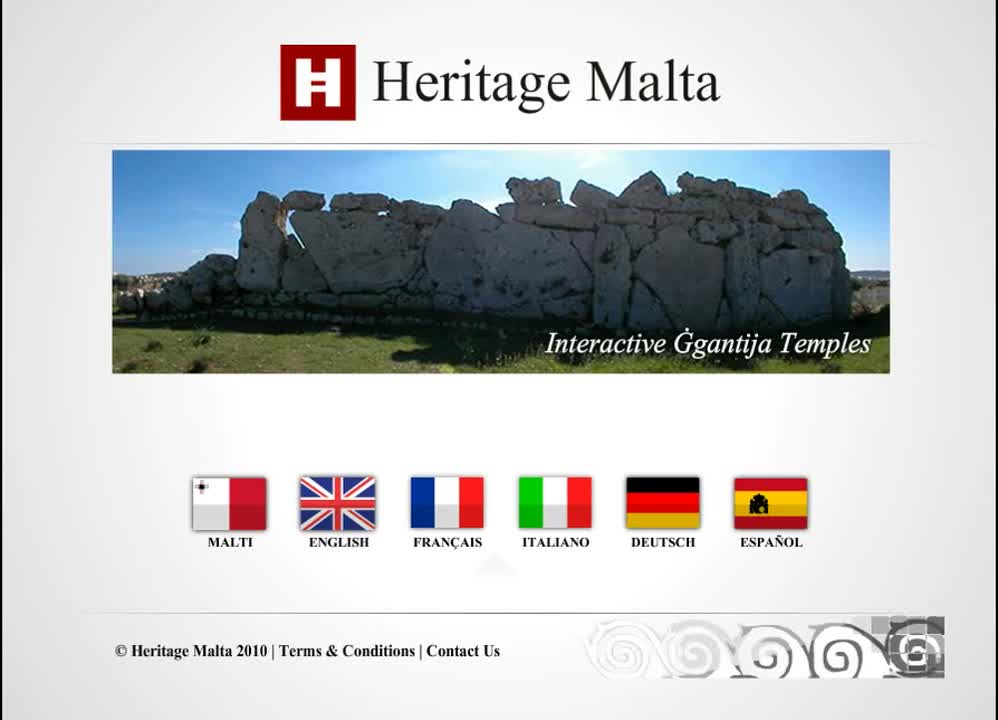
I recently came across a recording of a multimedia production I worked on around sixteen years ago for a touchscreen system at the UNESCO Ġgantija Archeological park in Gozo. Watching it today inevitably brings a smile. The technology belongs to another time, and so much of what we can do today would have seemed almost unimaginable then.
But what stayed with me after watching it wasn't really the technology. It was the realisation that this small piece of multimedia represents a particular moment when two parts of my life came together, and ultimately changed the direction of my career.
Before cultural heritage, there was technology
My journey with technology actually started much earlier. Before becoming involved in cultural heritage, I had already spent around fifteen years working in the private sector across IT, web design and development, digital communication and marketing.
Those years shaped the way I looked at technology. Building websites, developing digital solutions and working in marketing taught me to think not only about what technology could do, but about the person sitting on the other side of it. Who is using this? Is it understandable? Does it solve a real problem? Does it make something easier, more useful or more engaging?
Looking back, I think that mindset was probably more important to my later work in cultural heritage than any particular technology I learned along the way.
But the reason I began applying that thinking to museums and heritage was much more personal.
Two young museum visitors changed my perspective
My two daughters were very young at the time and, during family trips abroad, I watched them explore museums that encouraged them to interact, experiment and discover things for themselves. What struck me was how naturally they were enjoying the experience.
They weren't being told that museums were interesting. They were genuinely enjoying being there.
As a father, that stayed with me. I began thinking about the museums and heritage sites we had back home in Malta and wondering why we couldn't create more of that same sense of curiosity and discovery here. We have an extraordinary cultural heritage, so how could we make it more accessible, engaging and understandable, particularly to people who might not naturally see a museum as somewhere they wanted to spend their time?
It was never about making museums entertaining simply for the sake of it, nor about using technology to somehow make heritage "modern". If anything, the challenge was the opposite: how could technology help people get closer to the real story, while respecting the authenticity, complexity and significance of what we were interpreting?
That simple thought eventually brought together my background in technology with something that was becoming increasingly important to me: cultural heritage.
I certainly did not imagine where it would lead.
It was never really about the touchscreen
The old Ġgantija video is interesting to me because it captures that moment rather well.
At the time, multimedia and interactive touchscreens opened up possibilities that felt genuinely exciting. Images, video, animation, sound and information could be brought together and visitors could be given much more freedom to explore a story for themselves.
Yet the touchscreen itself was never really the point.
It was a tool for reducing some of the distance between people and cultural heritage.
That distinction has stayed with me.
Over the following sixteen years, technologies came and went. Things that once seemed innovative became commonplace and, eventually, obsolete. New technologies opened possibilities we couldn't previously have imagined. Visitor expectations changed too, as digital technology became an inseparable part of everyday life.
My own work evolved alongside those changes, but it also became much broader.
From multimedia to a much bigger digital picture
Today, as Head of Technology and Experience Development at Heritage Malta, multimedia and visitor experience remain part of my work, but I now see them within a much larger digital ecosystem.
I find myself thinking about digital strategy and standards, the modernisation of processes through IT-driven tools, digitisation and digital collections, 3D acquisition and reuse, the aggregation and accessibility of cultural heritage information, and how the digital assets we create can remain useful, understandable and reusable well beyond the immediate reason for which they were created.
Over time, this has inevitably brought other considerations to the forefront: interoperability, provenance, paradata, sustainability and the responsible reuse of cultural heritage data, including the relevance of FAIR and CARE principles.
On the surface, these might seem a very long way from an interactive touchscreen developed sixteen years ago.
I don't think they are.
I increasingly see them as different parts of the same challenge.
Making cultural heritage accessible isn't simply what happens when a visitor stands in front of an interactive exhibit, opens an app or explores an online collection. It starts much earlier, in how we document our heritage, how we structure and manage information, the standards we adopt, whether our systems can communicate, whether data can be discovered and responsibly reused, and whether the digital material we create today will still carry meaning tomorrow.
That broader understanding of accessibility is something I have developed gradually. I certainly wasn't thinking about all of this sixteen years ago, and I think it would be dishonest to pretend otherwise. It emerged through doing the work, seeing what worked and what didn't, encountering new problems and gradually asking different questions.
Technology should never become the objective
Perhaps one consequence of having spent so much of my professional life around technology is that I have also become increasingly cautious about technology for technology's sake.
I still get excited by new technologies. That curiosity has never gone away and I hope it never does. But experience has also taught me that new does not automatically mean better.
An extraordinary 3D model does not automatically create understanding. An immersive experience isn't successful simply because it is immersive. Digitising thousands of objects does not necessarily make a collection accessible. And introducing a new IT system does not represent digital transformation if all we do is reproduce an old process on a newer platform.
This has made one question increasingly important to me:
What problem are we actually trying to solve, and for whom?
Strangely enough, that takes me straight back to those two young museum visitors who unknowingly influenced the direction my professional life would take.
They didn't care about the technology.
They cared about the experience.
There is a lesson in that which I try not to forget.
From experiencing heritage to understanding it
At the same time, my thinking has evolved considerably. Sixteen years ago, I was predominantly interested in how technology could help people experience and engage with cultural heritage. Today, I am equally interested in how technology can help us understand heritage and preserve what we know about it.
The more involved I became in digitisation, the more I realised that a heritage asset is much more than its physical form.
Around an object, monument or site sit layers of knowledge: research, archaeological evidence, conservation interventions, historical photographs, drawings, publications, interpretations, decisions, stories and changing understandings. Some of those interpretations may themselves be questioned or replaced as new evidence emerges.
We now have the technology to produce extraordinarily detailed digital representations of cultural heritage, but that raises another set of questions for me. How much of the knowledge surrounding the thing we digitise are we actually preserving? Can somebody understand the evidence behind a representation? Can they trace why particular decisions were taken? Can they distinguish between what was captured and what was interpreted? Can they understand how our knowledge changed over time?
And just as importantly, will somebody looking at the digital material we create today, many years from now, understand what they are actually looking at and why it was created?
These are the kinds of questions that led me increasingly towards paradata and eventually towards my research around the Memory Twin.
The Memory Twin is part of the same journey
I don't see the Memory Twin as a departure from that original interest in visitor experience. For me, it represents an evolution of the same thinking.
Where I once concentrated principally on how technology could connect somebody with a cultural heritage asset, I am now equally interested in how we can digitally connect that asset with the knowledge, evidence, documentation, interpretation and memories that surround it.
The question therefore moves beyond simply asking:
How well can we digitise something?
I find the more interesting question is:
How well can we preserve and connect what we know about it?
That distinction matters to me because we are creating enormous amounts of digital cultural heritage material. Producing the data is only one part of the challenge. Ensuring that it retains context, provenance and meaning, and that it has the potential to continue generating knowledge rather than becoming another collection of disconnected digital files, is increasingly where I believe some of our attention needs to go.
And this is also where my professional work and academic research increasingly intersect. One continually makes me question the other, which I find both challenging and rewarding.
And somehow, back to Ġgantija
This is ultimately why finding that old video affected me more than I expected.
Sixteen years after that early multimedia work, I find myself involved with Ġgantija again. But Ġgantija isn't the story of these sixteen years. For me, it is almost a marker at either end of them.
Then, I was thinking about how multimedia could help visitors explore, understand and appreciate the site.
Today, I am looking at Ġgantija through a different lens, exploring how digitisation and the Memory Twin can help us understand and connect its different layers of information, documentation, interpretation and memory.
Between those two moments lies most of my professional journey in cultural heritage. Multimedia and digital interpretation gradually led into much broader questions around IT, digitisation, 3D acquisition, digital collections, standards, data reuse, digital strategy, paradata and research.
These subjects can easily be treated as separate disciplines or technologies. Increasingly, though, I find myself connecting them through a much simpler question:
How can we use technology responsibly to bring people, knowledge and cultural heritage closer together?
Perhaps the motivation never really changed
When I first watched the old video again, my immediate reaction was to think about how far technology had travelled in sixteen years.
The more I reflected on it, however, the less important the technology itself became.
My relationship with technology goes back considerably further than those sixteen years. What changed at that point was what I wanted to use my experience with technology for.
After spending years working in IT, web development and digital communication, two young girls enjoying themselves in museums made me look at another world differently. That observation somehow connected my experience with technology to a growing conviction that cultural heritage could be made more accessible, engaging and meaningful.
I could never have predicted that this would eventually lead me into digital strategy, digitisation, 3D technologies, standards, digital collections, research, paradata or the Memory Twin. Nor could I have predicted that sixteen years later I would find myself back at Ġgantija, asking a different generation of questions.
That is probably what I've enjoyed most about this journey. The questions keep changing.
And yet, beneath all that change, the motivation remains surprisingly familiar.
Make heritage accessible.
Make it understandable.
Make people curious.
Give them a reason to explore further.
And as the technology becomes ever more sophisticated, never lose sight of the heritage, the knowledge and, above all, the people we are doing it for.
Sixteen years later, I still think that's what it's all about.
This is a personal reading by Anthony Cassar, PhD research fellow on the Memory Twin Framework. The views expressed are my own.
Join the conversation
Share your thoughts. Submissions are saved for review. Your name and comment may be published under this article, together with a reply. Your email address will never be published.